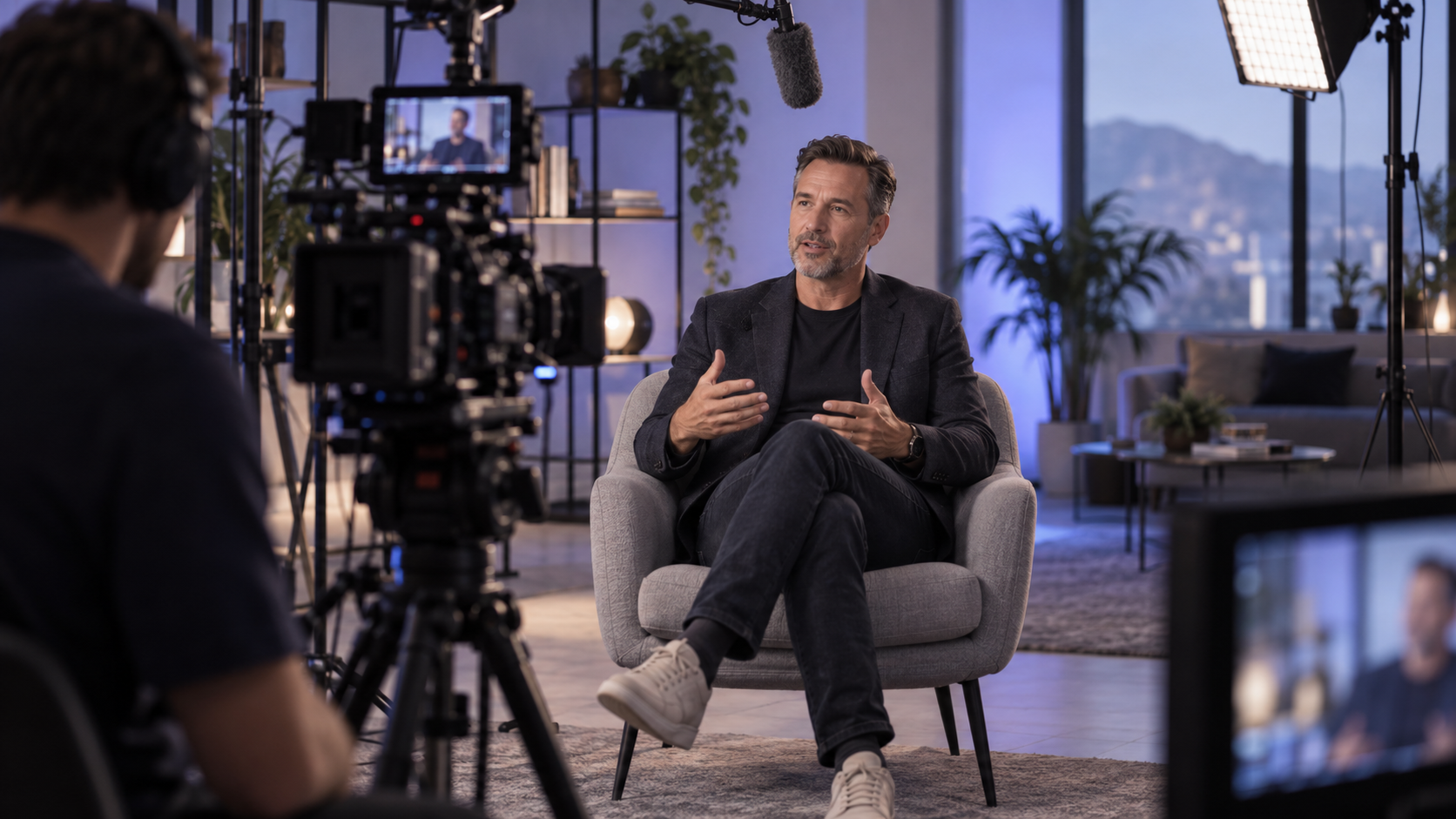
A trustworthy video helps people understand not only what a business says, but how it thinks, works and treats the people behind the next decision.
Viewers judge credibility quickly. They notice whether the speaker sounds natural, whether the examples are specific and whether the visual polish supports the message or tries to distract from a weak one. The goal is not to manufacture authenticity. It is to create the conditions in which real expertise can be seen clearly.
Start with one credible promise
A video becomes difficult to trust when it tries to make too many claims at once. Begin with one useful outcome for one recognisable audience. That promise should be specific enough to guide the interview, supporting footage and final call to action.
Replace broad statements such as “we deliver quality” with a claim the viewer can evaluate. Explain what changes, for whom and why your process makes that result more likely.
Pressure-test the promise before filming
- Can a customer understand the point in one sentence?
- Can the business support the claim with a real example?
- Does the promise address a meaningful customer concern?
- Can the video demonstrate the idea instead of only stating it?
- Is the next action a natural continuation of the message?
A smaller believable promise is more persuasive than a bigger unsupported one.
Put the right people on camera
The most senior person is not automatically the most credible speaker. Choose the person closest to the subject: a founder for the origin and ambition, a specialist for technical expertise, or a customer for the experience and result.
Confidence on camera matters less than clarity and genuine knowledge. A thoughtful answer with natural pauses often feels more trustworthy than a perfectly memorised script.
Match the speaker to the question
Best for purpose, direction and the reason the business exists.
Best for process, technical decisions and practical education.
Best for the problem, lived experience and measurable outcome.
Script for clarity, not perfection
A script should protect the structure of the message without removing the speaker’s natural voice. Write the opening, key claims and closing carefully, then use prompts or talking points for the sections where genuine explanation matters most.
Read every line aloud before production. Sentences that look polished on a page can sound formal or unnatural when spoken. Shorter phrases, active language and one idea per sentence make the delivery easier to understand.
Use a simple trust-building structure
“The viewer should feel that a knowledgeable person is helping them make a better decision — not that a brand is performing a sales script.”
Show proof while the claim is being made
Evidence is strongest when it appears beside the statement it supports. If a speaker explains a process, show the process. If a customer describes a result, add the relevant number, before-and-after comparison or project detail while the context is clear.
Proof does not have to mean a dramatic statistic. A real location, visible team, working prototype, screen recording or specific customer story can make an abstract claim tangible.
Useful forms of on-screen evidence
Make production quality support credibility
Production quality matters because poor sound, distracting lighting or an unclear frame increases the effort required to follow the message. The objective is not visual extravagance. It is to remove technical friction and make the speaker feel present.
Prioritise clean audio, comfortable eye-lines, controlled backgrounds and lighting that looks intentional. Brand elements should create continuity without turning the frame into an advertisement.
Protect the essentials first
- Record clear voice audio with an appropriate external microphone.
- Keep the speaker brighter and more important than the background.
- Remove objects or movement that compete for attention.
- Use a second angle or relevant B-roll to support important edits.
- Maintain consistent colour, typography and caption styling.
Edit for attention without feeling manipulative
Editing should make the idea easier to follow. Remove repetition, long setup and technical detail that does not help the viewer, but preserve enough breathing room for the speaker to sound human.
Fast cuts, exaggerated captions and constant motion can create short-term stimulation while weakening authority. Pace should follow the complexity of the message and the expectations of the audience.
Give each editing choice a clear job
Design the video for every viewing context
One master video rarely performs equally well everywhere. A website visitor, LinkedIn user and YouTube viewer arrive with different expectations. Plan the main story first, then create channel-specific openings, durations, crops, captions and calls to action.
Captions are especially important when sound may be unavailable and for viewers who need text support. Thumbnails and titles should accurately represent the content rather than promise a result the video does not deliver.
Prepare a practical content system
- Create a strong landscape master for the website and YouTube.
- Produce vertical extracts around one useful idea at a time.
- Add reviewed captions rather than unchecked automated captions.
- Keep important text inside safe areas for different crops.
- Use consistent thumbnails that remain specific to each video.
Measure signals that reflect real trust
Views alone do not reveal whether a video changed someone’s perception or decision. Combine attention data with meaningful next actions. Watch where viewers leave, which claims retain attention and whether the video supports enquiries, product exploration or progression to higher-intent pages.
YouTube’s content-performance guidance recommends comparing the opening with the promise made by the title and thumbnail, then using audience-retention data to understand how people respond. Apply the same discipline to videos hosted on your website.
Use a balanced measurement view
Before you press record
Confirm the audience, promise, speaker and evidence before the camera arrives. A clear production brief prevents the team from trying to solve strategic questions through extra filming or complicated editing. A structured video production and editing process keeps those decisions connected from brief to delivery. Before scripting or scheduling the shoot, complete the video production brief template so the audience, message, deliverables and approvals are agreed. You can also review selected applications in our video portfolio.
Use this final pre-production check
- The video has one primary audience and one useful outcome.
- Every important claim has a visible or verbal source of proof.
- The speaker understands the message without memorising every word.
- Audio, lighting, location and supporting footage have been tested.
- Aspect ratios, captions, thumbnails and calls to action are planned.
- Success measures are agreed before publication.
Choose the proof format for the buying decision
Use an expert explanation, process footage and a specific customer outcome.
Combine a focused walkthrough with implementation evidence and customer proof.
Show the problem in context, demonstrate the product and support it with credible reviews.
Copy this one-page brand video brief
Frequently asked questions
How long should a brand video be?
Use the shortest duration that fully delivers the promise
A focused social video may need less than a minute, while a customer story or considered brand film may need several minutes. Remove material that does not improve understanding, confidence or the next decision.
Should people memorise a complete script?
Usually not
Memorised delivery can sound controlled but emotionally flat. Protect essential wording where accuracy matters, then use interview prompts or structured talking points to preserve natural language.
Does authentic video need to look informal?
Authenticity and production quality are not opposites
A carefully lit, professionally recorded video can still feel genuine. Trust depends on honest language, relevant evidence and behaviour that matches the brand — not on deliberately making footage look unpolished.
What should we measure after publishing?
Connect attention with business progress
Review audience retention, completion, qualified clicks, enquiries and feedback from sales conversations. The strongest measure is whether the video helps the right people understand and trust the offer more quickly.