Rebuilding the WEM Website from WordPress to Tilda
Why we moved WEM's marketing website to Tilda, with a focus on content editing, everyday SEO and the team's ongoing work.
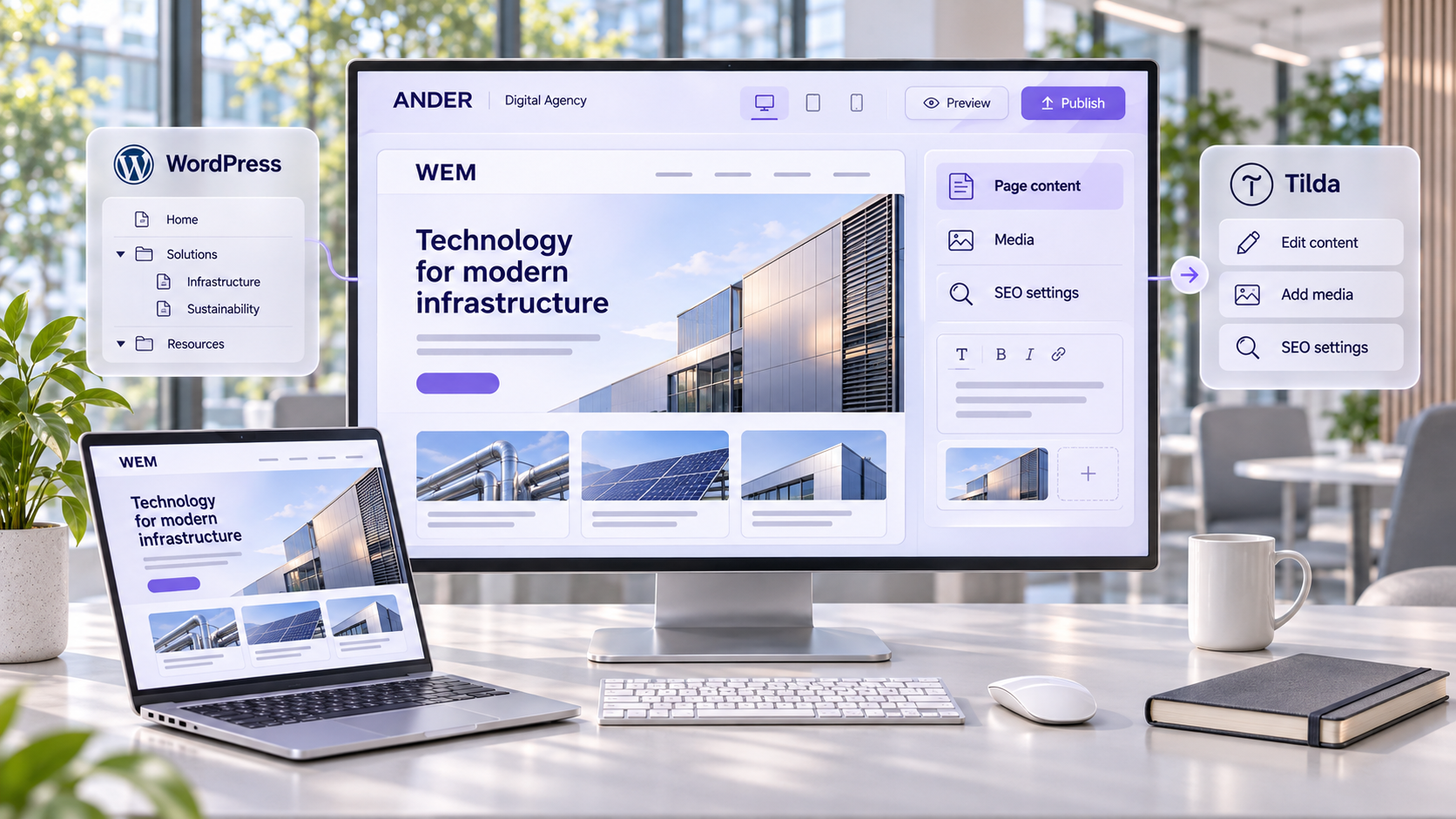
We rebuilt the public WEM website on Tilda with a practical goal: give the team a simpler way to manage marketing content and everyday SEO updates. The choice came from how the website needed to be used after launch.
WEM provides an enterprise platform for application development, workflow automation and governed AI. Its marketing website needs to explain those capabilities, present customer experience and help visitors take the next step. The people maintaining that information need a workable editing environment alongside a well-designed public site.
WordPress remained a capable option. For this project, however, we wanted to reduce the technical involvement attached to routine website changes. Tilda offered an approach that suited the marketing team's work, while leaving room for custom development where the project required it.
Why easier editing mattered to the marketing team
A marketing website continues changing after its main pages have been approved. An event needs a new date or banner. A page needs an updated explanation. An image or video needs replacing. An SEO specialist wants to refine the search title and description.
For WEM, these everyday tasks were an important part of the platform decision. We wanted the client, marketing managers and SEO specialists to be able to handle suitable content updates themselves, within a clear page structure.
That meant looking beyond the finished design. We needed to consider where a manager would find a piece of content, how they would change it and what they would need to check before publishing. The administrative side of the website mattered because it would be used repeatedly.
With Tilda, content and page settings could sit within a more contained editing workflow. The team could work on supported text and media fields, review page-level SEO information and publish updates without having to understand the custom code behind every part of the site.
The independence we wanted was specific. A content editor should be able to change an image in an editable block or update a post field. A new integration or a change to a bespoke layout still belongs with someone who understands its implementation.
This became the main reason for the move: a website that the marketing team could work with more comfortably during its normal week.
Why we chose Tilda for WEM
WordPress gives businesses considerable control over their websites. It supports flexible content structures and a large ecosystem of extensions. Its block editor also allows people to work with text, images, video and other content through an editorial interface.
A well-configured WordPress website can be straightforward for a client to edit. The experience depends on its theme, plugins, page builder, custom development and the way those pieces have been prepared for the team.
Our decision for WEM concerned the operating model we wanted for this particular marketing website. Tilda provided a visual environment that aligned with the intended content work and the way we planned to develop and support the site.
That is an important distinction when discussing a B2B website migration. The most useful platform is the one whose capabilities and maintenance requirements fit the organisation's actual needs. We considered WordPress's flexibility alongside the editing simplicity we wanted to achieve with Tilda.
Making everyday SEO work easier to manage
Access to SEO settings was another practical consideration. Marketing and SEO work often involves returning to existing pages to improve their titles, descriptions, headings and internal links as the content develops.
Page settings and content
Tilda provides page-level settings for search titles and descriptions, with separate controls for social previews. Its SEO documentation explains where those settings sit. Having these controls available in the same environment as the page content suited the workflow we wanted for WEM.
For an SEO specialist, this makes the relationship between the visible page and its search presentation easier to review. They can refine the copy, check the main heading and update the relevant metadata as part of the same piece of work.
Practical access and search performance
The benefit is practical access. Search performance still depends on useful content, page structure, technical implementation and the wider work behind the site. Moving a website to Tilda does not establish an automatic ranking advantage over WordPress.
For WEM, we wanted the team to have a more approachable way to carry out appropriate SEO updates, with development support available for changes that went beyond those controls.
Turning the Figma designs into a working website
The rebuild also involved translating approved designs into responsive pages. Our development work needed to preserve the visual direction while making it function within Tilda's editing and publishing environment.
We worked on page widths, spacing and typography, alongside the behaviour of cards and interactive sections. These details needed to hold together across screen sizes and across pages with different amounts of content.
A card containing a short title can behave differently from one with a longer explanation. A layout also changes when it receives content dynamically. Those situations need attention during implementation, particularly when the same component will appear in several sections of the website.
The project reinforced the value of testing published pages alongside the design. The real content, available screen space and behaviour of the platform all contribute to the finished result.
This was also where we needed to be deliberate about editability. Repeatable content could use structured fields. More bespoke sections needed development work, with a clear understanding of which changes the client could comfortably make later.
Giving recurring content a clearer structure
WEM's website includes Blogs, Events and Success Stories. Each has its own purpose and information requirements, while all need a consistent way to present and maintain entries.
Our work included developing these areas through Tilda Feeds and CMS-based structures. The aim was to make recurring information easier to manage as the site continued to grow.
Editable fields and reusable cards
Tilda's CMS Feeds allow content fields to be connected to repeated card elements. That gives the development team a way to define the presentation while keeping suitable titles, images and other values available for editing.
The structure still needs careful preparation. An event may need date and location information that is irrelevant to a blog preview. A success story may need a category that helps visitors find a relevant industry example. Those differences should be reflected in the fields and card layout.
Checking dynamic content after publication
We also had to work through the behaviour of the cards after publication. Dynamic content makes spacing, height and the clickable area important implementation details. Building a reusable pattern requires checking how it behaves with actual entries.
This helped clarify the kind of independence the new setup could offer. A prepared content structure gives editors a defined place to work; a different layout or a new content requirement may still need a developer to extend that structure.
Connecting registration to the existing WEM application
The public website also needed to connect visitors with WEM's existing application. Our work on the Create Account journey involved the website interface and its connection to the application team's registration requirements.
We worked with WEM's developer on the required fields, API submission and the next stage of the journey. The form work included validation, Cloudflare Turnstile and hidden fields intended to help identify automated submissions.
This was a separate responsibility from building the WEM product itself. The marketing site had to communicate correctly with an existing service and present the appropriate response to the visitor.
Working through that connection was a useful reminder that a visual website builder can sit within a wider technical system. The content team can manage suitable website information, while integration changes continue to require coordination and testing.
Keeping routine updates distinct from technical maintenance
One reason businesses involve a developer in a WordPress website is to look after the technical setup around its content. Depending on the installation, that can include updates, compatibility checks and the theme or plugins used by the site. These are recognised parts of WordPress maintenance.
The editorial experience and the maintenance requirement should be considered separately. A person may be comfortable editing a post while still needing technical support for changes to the system that publishes it.
For WEM, moving the public site to Tilda changed the way we approached that division of work. The team had an editing environment for regular content tasks, and our support could concentrate on the implementation details that required development knowledge.
That support continued after launch. Our work included content-feed adjustments, visual refinements and checks on navigation and registration links. Custom scripts and connections also needed care when the surrounding website changed.
The practical goal was to make routine publishing more accessible while keeping responsibility for technical changes clear. A client should know which updates they can make themselves and when a request should come back to the development team.
Checking the published website as it evolved
A website migration continues beyond moving content into a new editor. The published site needs to be checked as a complete experience, including the routes that lead visitors to content, enquiries or registration.
Our follow-up work on WEM included reviewing links and shared components across different parts of the site. A change in a common header or registration destination can affect more than the page currently being edited, so publication checks need to extend beyond a single screen.
Search continuity also needs its own attention during a rebuild. Existing URLs, useful content, indexing instructions and internal links should be reviewed when the platform changes. Where addresses change, redirects need to lead to relevant destinations. We explain that process further in our website redesign SEO checklist.
These checks help keep an easier editing workflow dependable. The team needs confidence that an update appears in the right place and that the surrounding website still works as intended.
What we would consider before a similar migration
The WEM project strengthened our view that the people operating a website should be part of the platform decision from the beginning.
We would ask what they need to update regularly, which content repeats and how much of the site requires custom behaviour. We would also review the existing application connections and the arrangements for ongoing technical support.
Tilda can be a suitable choice when a business wants a visual environment for its marketing website and the planned content fits a structure the team can manage. That suitability depends on implementation: clear fields, reusable components and sensible boundaries around custom code all matter.
WordPress may remain a strong fit when an organisation's requirements depend on its existing architecture, extensions or content workflows. The decision deserves a review of those requirements alongside the proposed editing experience.
For WEM, easier access to content and everyday SEO work was central to our choice. Rebuilding the website gave us an opportunity to align the public pages with that way of working and continue refining the details after launch.
Explore the WEM website
Visit WEM to explore the public website and see how its platform, resources and customer stories are presented. You can also view the project within our website portfolio.
If you are considering a WordPress to Tilda migration, or want a website that is easier for your team to maintain, our website design and development services can help assess the requirements. Talk to ANDER about your website.
Build a website your team can work with.
Planning a migration or reviewing your current website? We can help assess the content, editing needs and integrations before shaping the implementation.