Panda Drum: Building AI Video Ads for a DTC Brand
How ANDER connects brand analysis, scripting and AI video production for Panda Drum, with three creative formats, original examples and direct collaboration with the brand’s CEO.
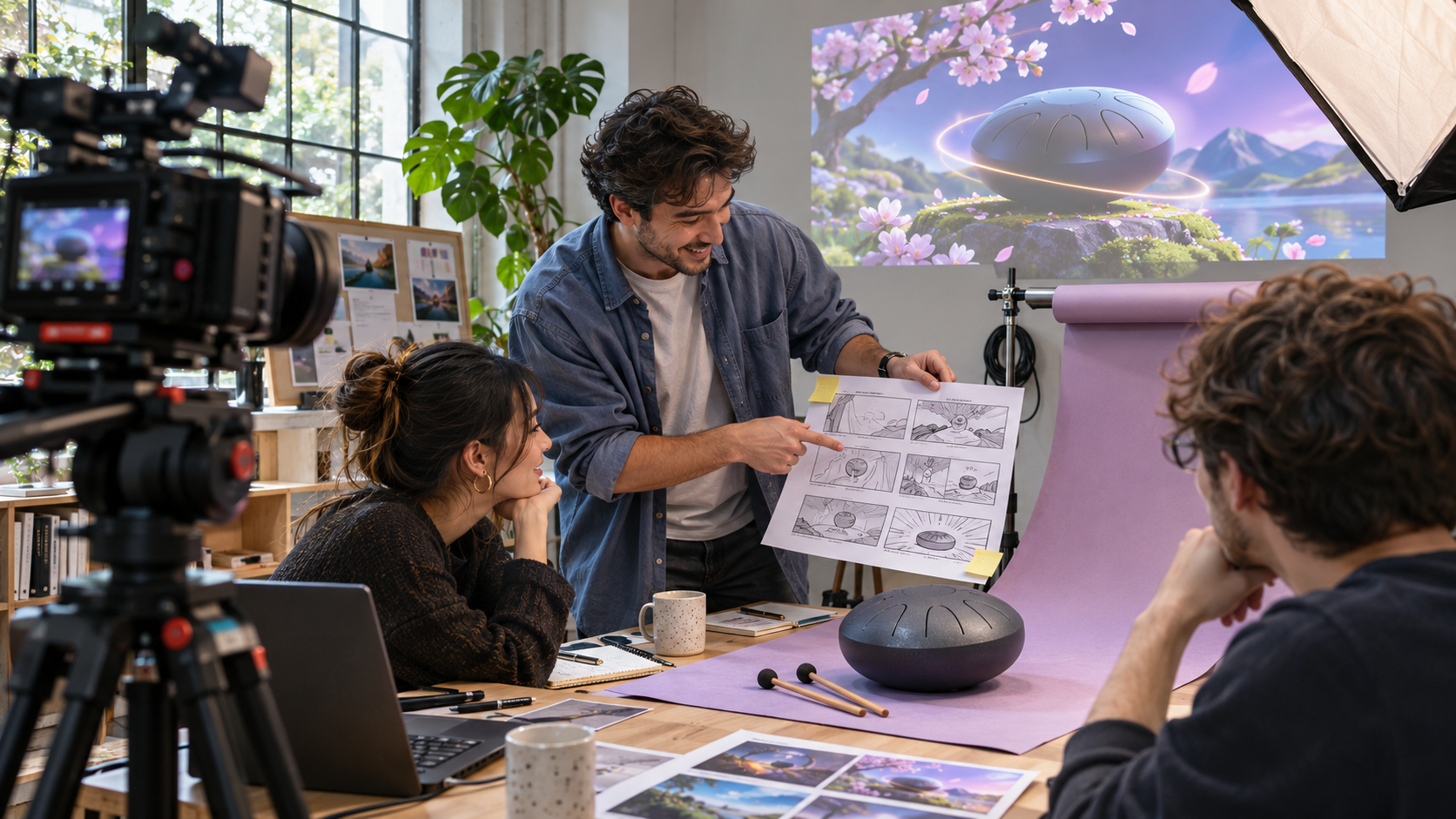
A DTC video project built around an AI production workflow
At ANDER, we connect the brand brief with the creative idea and the production needed to make it work. This Panda Drum case brings that approach into focus through original video examples, editing screenshots and communication with the brand. The project draws on the production experience of Artem Kordikov, co-founder of ANDER.
For Panda Drum, we built a complete AI video workflow from a single brief: brand analysis, script, storyboard, AI voiceover and every frame, without a real camera.
The goal was content that feels organic, not promotional: Pixar-style cartoons, claymation and AI UGC that look like real feed content.
The project connects several disciplines: understanding a brand, writing an idea, visualizing it and assembling the finished advertisement. For a direct-to-consumer business, those decisions meet in the same short viewing experience. A viewer encounters the creative before reading a production brief, so the finished sequence has to communicate the idea through its images, sound and progression.
We developed animated worlds, synthetic speakers and a slower visual approach. Each direction offered a different way to introduce the product while keeping the creative connected to the same brand and the audience it wanted to reach.
Start with the brand before choosing a visual treatment
We placed brand analysis at the beginning of the workflow. That order matters because a production method does not explain what a brand needs to communicate. The useful starting questions concern the product, the intended audience, the feeling the content should create and the action a viewer should understand.
For a comparable project, a brief should distinguish those communication needs from preferences about appearance. A request for animation describes a treatment. A request to make a product understandable to someone scrolling through a feed describes a task. Both can belong in the brief, but they guide different decisions.
Our video production brief guide provides a practical way to organize that discussion. The Panda Drum case illustrates why the brief remains useful after an idea is approved: it gives the team a reference when judging whether individual scenes still serve the intended message.
Agreeing on these points also makes review more useful. A brand can explain why a scene feels relevant, where the product needs more clarity and which message deserves emphasis. That gives the creative team specific feedback to work with and keeps each revision connected to the purpose of the advertisement from the outset.
Give the script, storyboard and AI voiceover one direction
The script, storyboard, AI voiceover and every frame formed parts of the same assignment. The practical relationship between them is important. A script sets up the sequence of information. A storyboard gives that sequence a visible shape. Voiceover introduces timing, emphasis and a particular way of addressing the viewer.
As a production principle, these decisions should be considered together. A sentence that reads clearly can require more screen time than a scene allows. A visually interesting moment may distract from the point being spoken. Resolving that relationship is editorial work, even when the images and voice are generated.
For brands planning similar content, our recommendation is to make the intended connection between words and pictures explicit before expanding the number of variations. That keeps feedback focused on the idea and supports the kind of content and creative support needed to turn a direction into usable material.
For an AI-led production, a storyboard can also become a continuity reference. Reviewing the product’s appearance, the relationship between scenes and the point at which it becomes recognizable gives feedback a concrete focus. For a new brief, we would use those checks to keep the product recognizable and make each scene contribute to the overall story.
Pixar-style and claymation worlds bring the idea into entertainment
3D cartoon worlds that blend advertising into entertainment. Still running 6 months later.
The collection includes three videos in this group. We used an animated visual language as the setting for the advertising idea, letting the created world carry the product communication. The characters, surroundings and movement give the viewer a story to follow while the product becomes part of that story.
For a DTC brand, animation offers room to express a situation through characters, objects and motion that would require a different production arrangement in live action. The creative responsibility remains to make the scene understandable and relevant. Detail alone does not establish a connection with the product.
The entertainment quality gives the message a setting people may choose to watch. When developing a comparable concept, the question is what the scene contributes to the story. A visual style earns its place when it helps express something the advertisement needs to communicate.
AI UGC creates room for different speakers and story structures
Many different AI speakers instead of one face, in comparison and storyline formats, including a podcast that flows into the product.
The AI UGC collection contains four video examples. We used comparison and storyline approaches, giving each speaker a role within the advertising idea. That distinction is useful when planning a range of creative ideas.
A speaker, a conversation and a product introduction each establish a different relationship with the viewer. The important editorial question is what the chosen setup helps explain. The existence of several generated faces does not, by itself, give each advertisement a distinct purpose.
Trust also deserves deliberate attention. Our guidance on brand videos that build trust connects creative choices with credible communication. For AI-produced advertising, teams should also review the platform’s current presentation requirements. Meta’s explanation of generative AI transparency in advertising provides relevant context for that review.
Direct communication with the CEO kept the work connected to the brand
We worked directly with Panda Drum’s CEO, Marek. He supervised the content, suggested creative improvements and confirmed tasks. That communication connected production decisions with the brand’s priorities and gave the work a clear point of contact for feedback.
The supporting screenshots show the editing workspace, examples of the ads remaining live and communication with Marek. Together, they show how the finished videos connected with the production timeline and the feedback coming from the brand.
The collaboration involved direction, feedback and confirmation of tasks. For a similar commission, those are useful responsibilities to establish early. The person preparing the creative needs to understand who can clarify the brand’s preferences and who can confirm that a proposed direction is ready to proceed.
This is one reason our video production and editing work includes attention to the communication around the assets. A shared understanding of the brief helps turn feedback into a decision the editor can act on, rather than leaving the next version dependent on guesswork.
 Enlarge image
 Enlarge image
 Enlarge image
Creative that remained in use beyond launch
We produced Meta ad creatives for the Panda Drum DTC brand using an AI video workflow. The ads continued running on Facebook more than six months after launch. The examples and screenshots show the creative still in use alongside the production work behind it.
That continued use matters for a creative team. The work had a place in the brand’s advertising beyond the initial handover, and the three format groups show the range of material developed around the same product. Animation, AI UGC and calm pacing each offered a different presentation to work with.
Ad longevity alone does not establish spend, sales contribution or return on advertising investment; those require campaign data. For creative planning, we focus on the decisions the project makes visible: a clear brief, several distinct treatments, direct brand feedback and finished assets that remained in use.
This connects with the broader practice of creative diversification. Meta Blueprint’s training on diversifying ad creative discusses varying formats, visuals and messages. We use those dimensions as practical questions when discussing a new creative range: what changes between concepts, what stays recognizable and which message each version is built to communicate.
AI production still needs a connected human workflow
The Panda Drum project brings production back to a simple relationship: a brief guides several creative stages, and the team has to keep those stages pointing toward the same result. Generated images, synthetic voices and editing tools each contribute material, but the overall direction still needs editorial judgment.
For another brand, we would begin by defining the purpose of each format and the decisions that need review. We would then consider how the concept, script, visual development and edit relate to that purpose. Each new brief needs its own production decisions, with responsibilities and approval points agreed before the team begins making assets.
The same emphasis on clear purpose and human review appears in ANDER’s approach to AI-supported workflows. The useful question is what the technology helps the team accomplish and how people retain responsibility for the finished work.
Our workflow connects strategy, creative development and delivery. An initial idea needs a defined message; the script needs images that support it; and the edit needs a pace that suits the audience and the placement. Keeping those relationships visible helps a brand review the work at the stage where a change can still be made clearly.
Publishing also belongs in the brief. A team should identify the intended platform, the required versions and the action available after viewing. That gives production a practical destination and helps separate creative feedback from questions about campaign setup or distribution.
Build the next creative discussion around the product and the idea
Panda Drum brings together three distinct visual approaches within one project: animated worlds, AI UGC and calm pacing. The complete examples let a brand team discuss those choices with something concrete in front of them.
A useful next discussion starts with the product, the audience and the message that needs to become clear. From there, a team can assess which format supports that message, what information is available for the brief and who will provide direction as the work develops.
If you are planning AI-produced video ads or reviewing the creative range available to your DTC brand, talk to ANDER about your project. Share the product context, existing materials and the question you need the creative to answer.
We can use that information to define a focused brief: the communication goal, the audience, the available brand assets and the intended placements. From there, the discussion can compare AI-produced ads, organic video ideas and the need for original filming without treating every format as the same production task.
The aim is a clear working direction that a brand can review before production expands. Relevant references, responsibilities and approval points help the team understand what is being made and how the finished work will be evaluated.
Shape the next idea around your brand.
Tell us about your product, audience and content goals. ANDER can help connect strategy, production and editing in a clear working brief.